
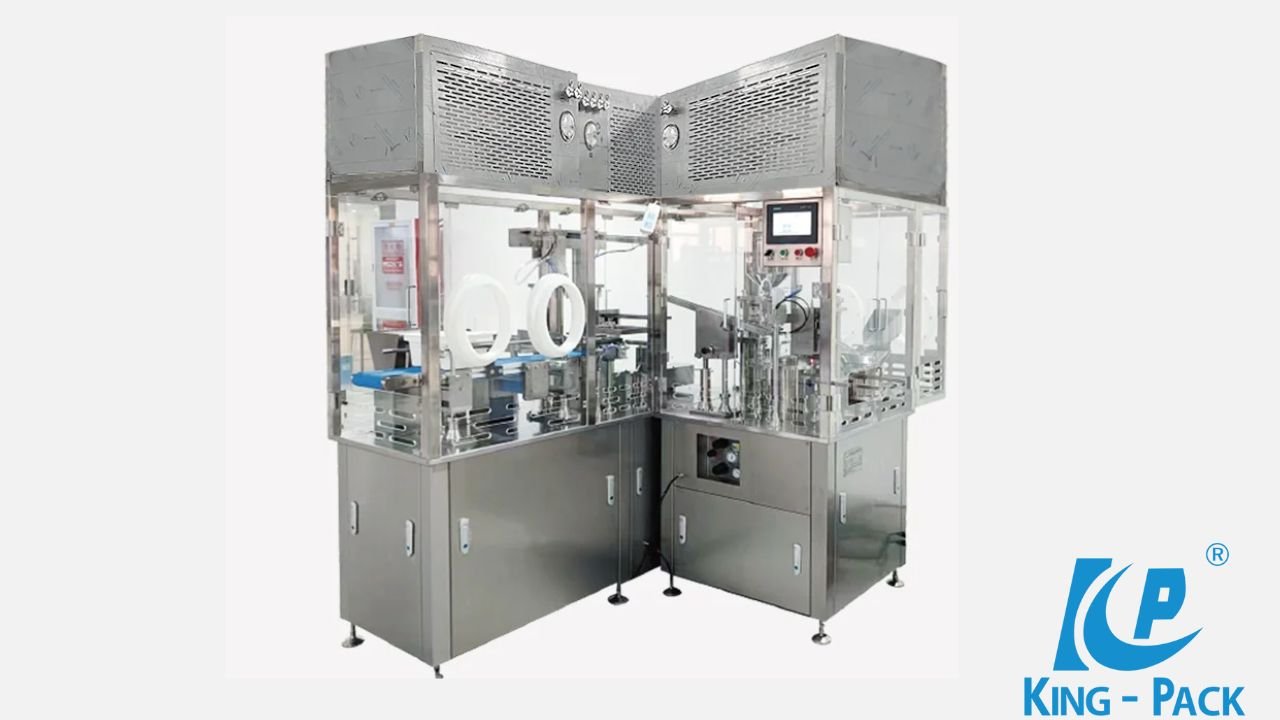
A prefilled syringe filling machine positions syringe barrels, meters the required dose and inserts the plunger stopper under controlled conditions. Depending on the application, the line may also handle ready-to-use (RTU) nests and tubs, apply vacuum stoppering, perform in-process checks, and connect to inspection, rod insertion, labeling and secondary packaging.
The correct syringe filling system is defined by the drug or formulation, syringe format, dose range, required output, contamination-control strategy and validation plan. Buyers should evaluate the complete process instead of comparing filling speed alone. For configured equipment, visit our syringe filling machine solutions.
Prefilled Syringe Filling Machine Selection at a Glance
| Application | Typical line direction | Critical confirmation |
|---|---|---|
| RTU nested syringes for sterile injectable products | Tub opening, nest handling, filling and stoppering inside an appropriate barrier system | Aseptic process strategy, interventions, component transfer and process simulation |
| Clinical, pilot or small-batch production | Compact or semi-automatic nested-syringe machine | Operator interaction, batch accountability and repeatable changeover |
| Commercial batch production | Automatic multi-head PFS filling and vacuum stoppering line | Sustained output, dose accuracy, reject handling and barrier integration |
| Viscous gel or bubble-sensitive formulation | Product-specific feeding and dosing with controlled vacuum filling or stoppering where justified | Air control, fill profile, stringing, stopper position and product recovery |
| Non-sterile diagnostic, veterinary or applicator products | Format-specific filling and closing system | Do not apply sterile-injectable assumptions; define the actual quality and hygiene requirements |
“Prefilled syringe” covers very different products. A machine for a sterile parenteral drug, a medical-aesthetic gel and a non-sterile applicator may look similar, but the process risks, controls and documentation are not interchangeable.
What Is a Prefilled Syringe Filling Machine?
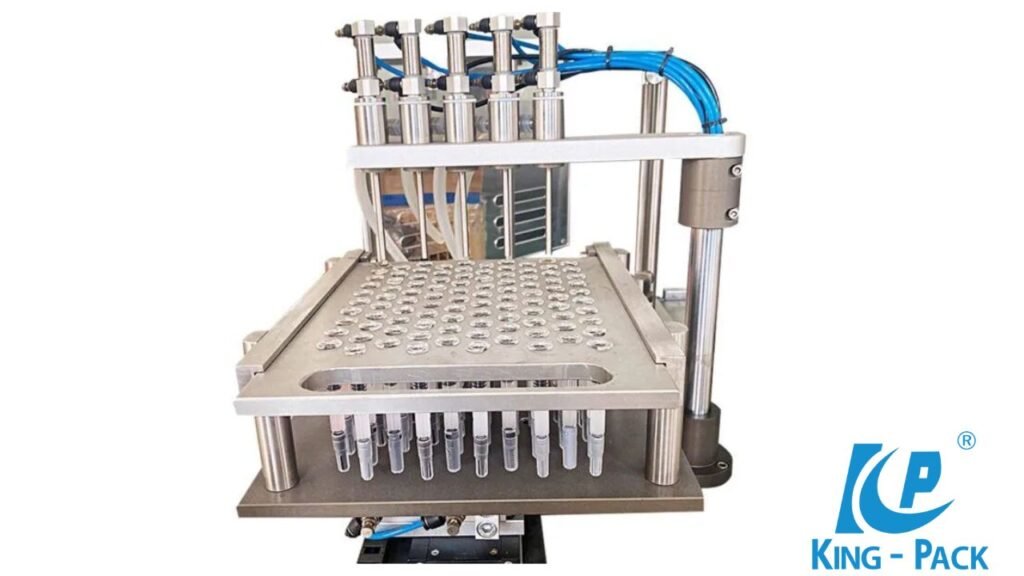
A prefilled syringe filling machine is pharmaceutical or medical-product packaging equipment that fills an empty syringe barrel and closes it with a plunger stopper. Many systems are designed around sterilized, ready-to-fill syringe nests supplied in tubs. The nest supports the barrels during filling, reducing direct handling before the stopper is inserted.
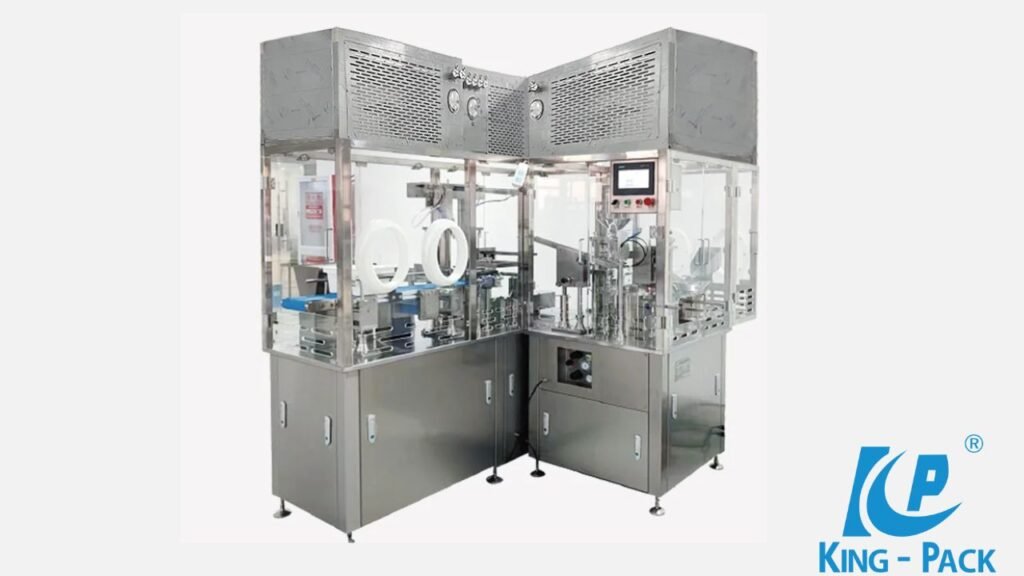
The filling machine is only one part of the manufacturing process. Upstream product preparation, sterile filtration where applicable, bulk-hold conditions and component transfer must match the validated process. Downstream operations may include plunger-rod insertion, backstop or safety-device assembly, inspection, labeling, cartoning and aggregation.
How the Prefilled Syringe Filling Process Works
- RTU tub transfer: sterilized tubs enter the controlled area through the defined transfer and decontamination route.
- Bag and lid removal: outer packaging and tub lids are removed manually or automatically according to the line design.
- Nest positioning: the syringe nest is located beneath the filling heads without damaging barrels or needle shields.
- Filling: one or more nozzles dispense the programmed dose. The motion profile may use bottom-up filling or multiple stages when required by the product.
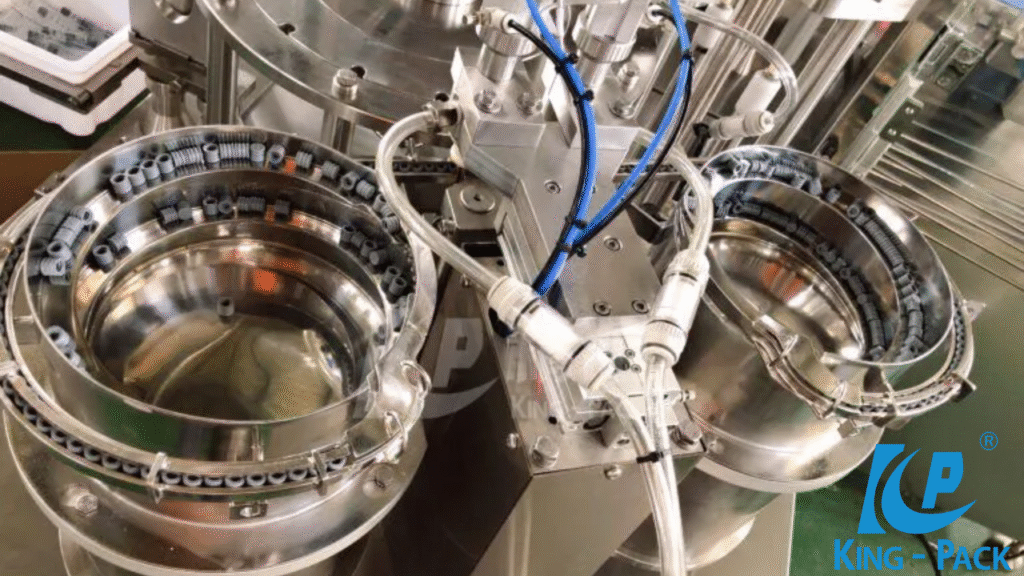
- Stopper insertion: plungers are fed, positioned and inserted, commonly with controlled vacuum to reduce trapped air and achieve the specified stopper position.
- In-process control: the system checks critical conditions such as container presence, stopper presence, dosing status and rejects.
- Outfeed: closed syringes leave the filling zone for inspection and device or packaging operations.
The actual sequence depends on whether the syringe arrives nested, bulk or partially assembled and whether the product requires aseptic processing. These inputs must be fixed before the machine layout is selected.
RTU Nested Syringes, Bulk Syringes and Other Formats
RTU Nested Syringes
Ready-to-use syringes are supplied sterilized and nested in a tub. Equipment may process the complete nest during filling and stoppering, then return it to the tub. Confirm tub dimensions, nest pitch, syringe material, nominal size, flange design, tip closure, needle shield and stopper specification.
Bulk or Denested Syringes
Bulk handling may require washing, siliconization, sterilization or feeding operations that are not part of a standard RTU nested line. The required preparation route and risk controls must be defined with the container supplier and the manufacturer’s quality team.
Cartridges and Syringe-Like Applicators
Some machines can be adapted for cartridges, diluent syringes or non-injectable applicators. Format capability should be proven with production components; a statement that the machine accepts “all syringe sizes” is not a substitute for sample trials and change-part drawings.
The current ISO 11040-4:2024 covers glass barrels and sterilized subassembled syringes ready for filling, including materials, dimensions, quality and performance requirements. Applicable standards and pharmacopoeial expectations should be confirmed for the target market and specific product.
Filling Technologies and Product Compatibility
| Dosing approach | Potential strengths | Items to evaluate |
|---|---|---|
| Peristaltic pump | Disposable product path can simplify changeover and limit cross-batch contact parts | Tubing life, pulsation, calibration, fill profile and product compatibility |
| Piston or rotary-piston pump | Positive displacement can support repeatable dosing across many liquid or viscous products | Product-contact surfaces, seals, cleaning/sterilization, wear and shear sensitivity |
| Ceramic piston pump | Wear and chemical resistance may suit selected formulations and cleaning regimes | Fragility, particle sensitivity, sterilization method and product-specific accuracy trials |
| Time-pressure or pressure-based dosing | Few moving product-contact parts in selected applications | Bulk pressure stability, viscosity changes, temperature and dose consistency |
The supplier should demonstrate the chosen method with representative product. Water trials cannot predict bubbles, stringing, shear response, adsorption, foaming or dose repeatability for a complex formulation.
Vacuum Stoppering and Air Control
During vacuum stoppering, the plunger stopper is inserted while pressure around the barrel is controlled. The purpose is to position the stopper while managing the headspace and reducing trapped air. Required vacuum level and insertion profile depend on syringe geometry, stopper properties, fill volume and product behavior.
Excessive vacuum can cause product movement, foaming or stopper-position problems; insufficient control can leave an unacceptable headspace. Acceptance criteria should include stopper position, cosmetic defects, air-bubble limits, leakage or integrity-related tests required by the product program, and the effect on downstream rod insertion.
Technical Specifications to Put in Your RFQ
- Product: formulation type, viscosity range, density, surface tension, shear sensitivity, foaming, oxygen sensitivity and temperature limits.
- Dose: minimum, normal and maximum fill volume plus product-specific accuracy and precision acceptance criteria.
- Syringe system: supplier, drawings, material, nominal size, tub/nest configuration, tip closure, stopper and plunger rod.
- Capacity: target sustained output, batch size, changeover frequency and required line efficiency definition.
- Barrier strategy: open RABS, closed RABS, isolator or other arrangement, with decontamination and transfer interfaces.
- Product path: single-use or reusable, hold-up volume, connection method, cleaning and sterilization approach.
- Stoppering: insertion method, stopper feed, vacuum range, position control and reject criteria.
- Inspection: container, fill, stopper and defect checks; sampling or 100% control where required.
- Automation: recipes, audit trail, user access, alarms, batch records, data interfaces and backup strategy.
- Utilities and footprint: power, compressed gases, vacuum, exhaust, cleanroom access, maintenance clearance and component flow.
Aseptic Processing and Barrier Integration
For sterile injectable products, the filling machine must be integrated into the site’s contamination-control strategy. The line layout should minimize direct interventions and support defined material, component, personnel and waste flows. Barrier decontamination, environmental monitoring, glove access, cleaning, line clearance and recovery from stoppages must be designed as a system.
The FDA guidance for sterile drug products produced by aseptic processing addresses facility and equipment design, process validation and quality control. The European Commission’s EU GMP Annex 1 provides guidance for manufacture of sterile medicinal products, including contamination-control principles.
The applicable regulatory framework depends on product classification and market. A filling machine or laminar-flow module does not by itself make a process compliant or sterile. The manufacturer is responsible for the validated process, qualified facility, trained personnel and quality system.
In-Process Control and Inspection
- Confirm syringe and nest position before dosing.
- Detect missing, doubled or incorrectly oriented stoppers.
- Monitor pump status and define how fill quantity is verified.
- Track rejects with a secure reject path and batch reconciliation.
- Inspect stopper position and visible defects according to the quality plan.
- Provide data records and audit controls appropriate to the production system.
Final inspection requirements may extend beyond the filler to particles, container defects, fill level, closure position, cosmetic appearance and device assembly. Define ownership and data exchange between machines before line integration.
FAT, Qualification and Process Validation
| Stage | Typical focus |
|---|---|
| Design review | Approved requirements, risk assessment, layout, product/component flow, utilities and documentation plan |
| Factory acceptance test | Mechanical and functional checks, format handling, alarms, interlocks, recipe controls and agreed test materials |
| Site acceptance and qualification | Installation, utilities, calibration, operating ranges, interfaces and site procedures |
| Process validation | Product-specific filling and stoppering performance, cleaning/sterilization and applicable aseptic process simulation |
FAT should use production syringes, stoppers, tubs and nests. Where the actual drug product cannot be used, agree on a justified substitute that reproduces the critical handling and dosing behavior. Acceptance criteria must be written before testing.
How to Compare Prefilled Syringe Filling Machine Suppliers
- Request project references for comparable syringe formats and product behavior.
- Ask who owns the barrier, filler, controls and line-integration responsibilities.
- Review change-part lists, adjustment points and documented format-change procedure.
- Confirm product-contact component certificates and documentation deliverables.
- Evaluate local installation, training, spare-parts and remote-support arrangements.
- Compare total project scope and validation support, not only the base-machine price.
If your project also evaluates vial formats, compare our vial filling machine and processing solutions. The container-closure system and product requirements should drive the choice.
Information to Send for a Technical Proposal
Send the syringe and stopper drawings, physical samples, nest/tub specification, product properties, fill-volume range, target batch and output, intended market, cleanroom and barrier concept, product-path strategy, required inspections, controls/data requirements and available utilities. State whether the line should include tub opening, denesting, rod insertion, inspection, labeling or cartoning.
Frequently Asked Questions
Can one syringe filling machine run several syringe sizes?
Often yes, with dedicated format parts and recipes. Compatibility must be confirmed from actual drawings and samples because tub, nest, flange, tip closure and stopper differences affect handling.
Why is vacuum stoppering used?
It can help insert the stopper while controlling headspace and trapped air. The settings must be developed for the product, fill volume, syringe and stopper combination.
Which filling pump is best for prefilled syringes?
There is no universal best pump. Select it from dose range, viscosity, shear sensitivity, accuracy criteria, product-contact strategy, cleaning or single-use requirements and trial results.
Does the filling machine guarantee sterility?
No. Sterility assurance depends on the complete validated process, facility, components, product path, barrier system, procedures, personnel and monitoring program.
Configure Your Prefilled Syringe Filling Line
KING PACK can configure compact and automatic syringe filling systems around your syringe format, formulation and production target. Review our prefilled syringe filling equipment, explore broader filling-line solutions, or send your samples and user requirements for a technical proposal.